
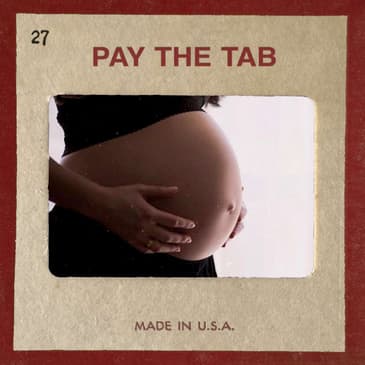
Why do Black women have a nearly 400% higher risk of dying in prenatal care and childbirth? Khiara Bridges, a leading expert on race, class, and reproductive rights, joins us to spotlight the real reasons for America's racial health crisis - and how to fix it.
SHOW NOTES
Guest: Khiara Bridges
Khiara Bridges is a professor at UC Berkeley School of Law and a nationally-recognized expert on the intersection of race, class, and reproductive rights, and the maternal health crisis afflicting Black women. She has authored four books including her latest, Expecting Inequity: How the Maternal Health Crisis Affects Even the Wealthiest Black Americans.
SELECTED WORKS BY KHIARA BRIDGES:
- Expecting Inequity: How the Maternal Health Crisis Affects Even the Wealthiest Black Americans (book)
- Reproducing Race : An Ethnography of Pregnancy as a Site of Racialization (book)
- Race in the Machine: Racial Disparities in Health and Medical AI (article)
- Racial Disparities in Maternal Mortality (law review article)
MORE ON NFL BRAIN TRAUMA SETTLEMENT:
HIGHLIGHTS OF EPISODE:
[7:53] Discrepancies in medical care between Black and white patients
[12:54] Pregnant Black women “perform class privilege” to help odds of survival
[18:49] Myth of genetic differences and “race correction” for Black patienets
[27:21] Real causes of Black patients’ increased diseases
[44:43] Black doctors improve health and survival of Black newborns
[54:39] Health care must be a basic human right for all
[00:00:01] So Adam, I have a question for you. Let's say both of us go to the same doctor for the same medical issue. Let's take, for example, high blood pressure and hypertension. How do you think our visits might differ? Well, first of all, I'm a lot more stressed out and uptight than you in general. I won't disagree with that.
[00:00:23] Probably my visit would last longer, you know, more stuff to check out. But I guess we would have a similar experience, right? Like super rushed nurse taking the vitals, the doctor hurrying through, and then they maybe order some tests, go from there, that kind of thing? Yeah, not a bad guess, but it would be incorrect. Let me break it down, right? Black Americans statistically are more likely to have medical problems just off the bat,
[00:00:52] including high blood pressure, a life expectancy gap differential of around five years, give or take. Yeah. So just, you know, just that for starters. And then on top of that, it's sort of a double whammy effect that we are more likely to get worse care from doctors and nurses. Mm-hmm. So just by way of examples, Black patients are less likely to be treated for pain. Wow. Yeah. Just across the board. Across the board. Black folks are less likely to be admitted to hospitals.
[00:01:23] Hmm. Just in general. In general, for the same conditions as a white person. Finally, Black folks are more likely to have lower limbs amputated. Jeez. That's pretty crazy, you know? And I'll say I had no idea about the likelihood of having medical problems in the first place and the care being so different and so horrific. Most of us don't know about it.
[00:01:46] Yeah. I mean, I sort of feel like I can't be complaining about my medical conditions or trips to the doctor going forward because that's nothing. Or you can, but in context of, you know, Black folks having it much worse on average. Well, if you give me permission, maybe once in a while. Yeah, once in a while. All right. Whole world for the taking. Whole world for the taking. See a dog from the spaceship.
[00:02:15] Can't fall from the plantation with a long way to go. Whole lot to build or just more to destroy. All depend on our will. No hands on the will. I don't take control. Oh, no, here we go. Down the rabbit hole. So we've heard stories told on why black Americans have it so much worse with medical problems, right? And with medical care. Yes.
[00:02:37] And we're told that it's due to supposed genetic differences between black people and white people, right? That black genes, somehow there's some genetic components that make diseases more likely. Black people, we're told, have innate traits like a higher tolerance for pain. Of course. And in the OBGYN context of pelvic hardiness. Whatever that means. Whatever that means.
[00:03:06] And just it's built into our medical system. I mean, we've been hearing about this term race correction in medicine, which is a thing in current medicine for kidney treatment, lung treatment, brain function. Right. I mean, I had read about the NFL. There was a lawsuit in a settlement, I think. Yes, it was. For traumatic brain injury. Right, exactly.
[00:03:29] So professional football gave a whole lot of people TBI, traumatic brain injury, a very dangerous and deadly disease. And the black players were getting paid less in the settlement because their baseline brain function was supposedly lower than the white players. Right, right. And that was like a medical thing that was put into the settlement. Exactly, exactly. And as grotesque as that is, like that's built into our medical system today, right?
[00:03:57] Doctors are taught about these racial differences. In medical school, right? Yeah, in medical school and using it in practice. And it's crazy. You think there's something that dates back to the 19th century, right? Yeah. And lo and behold, you know, all of this stuff is just complete fabrication. It's just lies. And, you know, the whole concept of race is a myth.
[00:04:20] It was invented hundreds of years ago to justify the brutality and evils of the slavery system, forced labor, colonization, and really our whole caste system. Absolutely. Based on white supremacy. Come to find out that the latest science is very clear that there are no genetic differences between the so-called races because there is no such thing as different races. And, you know, as we'll hear in today's episode, you know, it's not for lack of looking.
[00:04:50] Not at all. They've been spending millions of dollars on studies to find that race gene. Yes. And, you know, that could help explain some of these medical differences, but lo and behold, they haven't found anything. Right, right. So one area that's making a lot of headlines today or lately are black women in childbirth. And the statistics are shocking and disturbing.
[00:05:14] Black women today are nearly four times more likely than their white counterparts to die from pregnancy-related causes. Right. So this is like in medical care, like going to a hospital and have a baby. In a hospital and controlled for like similar conditions. That's disturbing enough. But what's more disturbing is that that gap has been increasing over time. Wow. Black women are less likely to receive surgical interventions if hemorrhaging after childbirth.
[00:05:44] Black women receive far more needless C-sections. Yeah. So what's that based on other than just straight racism? That's there's no explanation for it, frankly. And the list goes on. We are joined today, thankfully, by Kiara Bridges, who is all over this area. She's an expert in this in this particular topic. Right. She has a powerful new book called Expecting Inequity.
[00:06:08] Through the course of researching for that book, she took a deep dive and was embedded in a maternity ward at a high-end San Francisco hospital. Right. She interviewed over 200 patients. So she was able to take a very up close, in-depth look at how it was for black women who are coming in for prenatal care and childbirth. We're delighted to have Kiara Bridges join us. She's a professor at UC Berkeley School of Law. She earned her law degree and PhD in anthropology from Columbia.
[00:06:38] She's a leading authority on the medical profession's discrimination against black folks and uniquely qualified to break down the racial gap in our health care system. And her latest book, Expecting Inequity, How the Maternal Health Crisis Affects Even the Wealthiest Black Americans, is just a riveting read. We'll dig into that as we go forward.
[00:06:58] We had a great conversation with Kiara, busting some myths, breaking down the real causes for black Americans' unequal medical care, and what we need to do to fix our horrific medical system. We hope you enjoy it. Kiara Bridges, we are so excited to have you join us today on Pay the Tab. Adam and I have been very much looking forward to this.
[00:07:25] Your book, which we'll get into, is just a fascinating, riveting, impactful read. So thank you for gifting us with that. And yeah, welcome to Pay the Tab. Yeah, well, thank you so much for inviting me to talk about my new book, Baby. I'm excited to see where this conversation goes. Very cool. So let's start with the black maternal health crisis, as you described it. If you could just explain and give us an overview to help ground our conversation. Absolutely.
[00:07:52] So the reality is that black people are more than three times more likely than their white counterparts to die from a pregnancy-related cause. So during pregnancy, during childbirth, or during the postpartum period, which extends to one year after birth, there's nothing new about that statistic. Racial disparities and maternal mortality have always existed in the U.S.
[00:08:17] When epidemiologists first started counting the rates at which people die during pregnancy, this was in the early 20th century. Black people still were outpacing their white counterparts when it came to maternal deaths. In fact, the racial disparity has widened over the years, over the generations. In the 1900s, black people were twice as likely as their white counterparts to die from a pregnancy-related cause. And today, we're close to four times as likely to die.
[00:08:46] So it's almost doubled over that time. Absolutely. And so what that statistic hides, though, is that racial disparities and maternal mortality persist across income levels. A lot of people sort of assume that the higher rates of pregnancy-related deaths in black people are due to the disproportionate burdens of poverty that black people bear. And that's, you know, poverty, we know, sickens and kills. Sure.
[00:09:13] But the reality is that those racial disparities persist across income levels. So even at the higher ends of the socioeconomic ladder, black people are still dying at higher rates than their white counterparts. Got it. In fact, the disparity widens as you move up the socioeconomic ladder. It'd be helpful to understand your research, right? So you were actually embedded, right, for two years in a high-end, quote-unquote, San Francisco hospital, which you, you know, called a pseudonym, but Golden Health? Yes. Yes.
[00:09:43] So if you could tell us a little bit about Golden Health and your, your work there, what did that entail? So for two years, starting in January of 2022, I believe it was, I just sat and observed the obstetrics department of a well-resourced hospital in San Francisco. And as you mentioned, I give it a pseudonym. This is a hospital that caters to the commercially insured. Got it.
[00:10:10] This is not a hospital that is directing its focus at all to vulnerable people. This is not a hospital that cares for significant numbers of Medicaid-insured folks or uninsured folks. They send those folks over to the public hospital in San Francisco, which we call the General, and that is not a pseudonym. So what would you say your key findings were? My key findings are that Black people are well aware of the Black maternal health crisis.
[00:10:38] And that's a good thing and a bad thing, right? So on one thing is, it's, you have to be aware. You have to be aware of what you're up against. You have to be aware of the dangers that are in front of you. Black people were very aware of the precarious nature of their reproduction in the U.S. But it's also a bad thing because, well, two things. One, stress is terrible for pregnant people.
[00:11:03] It's known to generate negative health outcomes, negative pregnancy outcomes. Secondly, it's a bad thing because we're, as a country, we're not doing anything about the Black maternal health crisis. So essentially, we've created a structural, this is a structural problem. This is a problem of politics, of bad politics. This is a problem of neglect. And it's not a problem of lacking information, right? Absolutely. No.
[00:11:33] The folks who I interviewed particularly, and while I focused on commercially insured or high-income people, the same can be said about low-income folks as well. I work with them in, you know, that population in an earlier book. People have excellent information. They know all the questions to ask. So it's not a, this is not a problem of we need to educate people, you know, give them health literacy. Instead, this is a structural, systemic, political problem.
[00:12:02] But we're leaving it to individuals to survive it. We're leaving it to individuals to navigate it. And that, to me, is an abdication of responsibility. And the second sort of insight is that in light of this awareness, people were doing everything that they could possibly do to not end up a statistic, to not end up yet another avoidable, you know, preventable Black maternal death. Right, right.
[00:12:31] To quote, you know, a passage from your book, you say that class-privileged Black women try to purchase and escape from the Black maternal health crisis. Can you give us a sense of what that looks like and maybe a story or example that would help paint that picture? Yeah. You know, one of my, I mean, I have so many favorite parts of this book. But one of my favorite parts of the book, I love the media chapter, but I also love the chapter that's titled Going to the Doctor in Yale Sweatpants.
[00:12:58] Because that is literally a strategy that so many of the people that I interviewed adopted during their pregnancies.
[00:13:07] So the idea is that if one can perform one's class privilege, if one can signal to your care providers that you are educated, that you are not poor, that you quote unquote deserve to reproduce, that this is a pregnancy that will not be a burden on society, that you're not a welfare queen.
[00:13:30] If you can signal these things during your clinical encounters, then you're going to receive health care that is on par with the health care that your white counterparts receive. And so my interviews were filled with stories of Black people intentionally performing their high education, intentionally performing their marital status, intentionally performing the status that they have.
[00:14:00] And the folks who are interviewed were conscious to make sure that those sweatpants had on the insignia of the elite institutions that they attended or, you know, were affiliated with. Performing marital status. It's a common, common symptom of pregnancy or consequence of pregnancy is that things swell, your fingers swell, your feet swell.
[00:14:22] The Black folks who are interviewed, so many of them told me that they refused to remove their wedding rings during their pregnancies, even though their fingers were sausages. They couldn't get it off without, you know, surgical intervention. But they left it on because they knew that it was important for the people who were perceiving them to know that this was- I'm not a single mother. I'm not a single mom, right? I have somebody riding with me.
[00:14:48] One thing that I was surprised to hear about from my interviewees, because I didn't expect it, were that Black women who were married to non-Black people, to non-Black men, specifically white men, were very intentional about making sure that their white husbands were present with them during their clinical encounters. I'm not surprised. Right, because not only is it like, you know, somebody cares about me, so you should care about me too. A white person.
[00:15:17] A white person cares about me. Right. And so that might, his value might actually transfer to me in your perception, and you recognize that I'm deserving of the best that you can offer. And so, again, one of the, I wouldn't say surprising things, but one of the things that I emphasize in the book is that women are very conscious about these. This isn't like an afterthought. This isn't a, oh, I didn't even realize I was doing that.
[00:15:47] But this is something like that they were very well aware that they were doing in order to specifically survive their pregnancies. And one of the values about, you know, having interviewed 125 non-Black people for this book is that this never came up for the non-Black folks who I interviewed.
[00:16:06] It was only for the Black identifying people that they were like, my race matters during the next, it matters in my entire life, but it particularly matters during these next nine months. Right, right. And I need to manage my racial disadvantage in whatever ways that I possibly can. Deep. That is so deep. And, you know, and it's really, it's, it's, I've had some really wonderful conversations about the book.
[00:16:31] And one of the things that I didn't think about when I was writing the book, but only in dialogue after I wrote the book, that I came to realize what a dangerous is not the best word, but I'm just going to say dangerous strategy it is to perform one's class privilege with respect to those who do not have class privilege. Right. So like essentially folks are engaging in respectability politics.
[00:16:58] We're like, you know, we're, we're not, we're not like them. We're not like them. But then like at the same time, by saying we're not like them, we are justifying or legitimating the treatment of them. Yeah. Right. Like we're, we're justifying the bad treatment of them. And so, uh, you know, a politics of solidarity would say, no, I stand with them. You know, I'm not different from them, but in a life or death kind of scenario. You don't have that, you don't have that luxury.
[00:17:24] We don't have the privilege of, of, of, of those types of, um, political stances that might be good for the group as a whole, but might endanger you as an individual. But as you just mentioned, the statistics, they haven't budged. We still have outcomes on the higher ends of the socioeconomic ladder as black people that are worse than the outcomes of white folks who are, you know. Less educated.
[00:17:52] Less educated, housing insecure. Don't go to the doctor. Right. So what a profound indictment of anti-blackness. What a profound indictment of structural racism that. Absolutely. It doesn't matter if we've done everything right within market capitalism. Yeah. That we still have these enduring durable structures that sicken and kill us.
[00:18:19] You spend a little time talking about these two myths that, uh, that we've, we've seen that are just, just confounding. And then the first one, um, that I guess I didn't realize the extent to which this was used to explain these health outcomes is basically bad genes. That black people have bad genes, like there's different genes, more prone to certain diseases, which could cause health problems. We're talking about medicine in general. That's one of the myths. But is that also, uh, come into play with, uh, maternity and childbirth?
[00:18:48] Um, in my first book and reproducing race, um, I talked about the myth of the, um, pelvic hardiness, the idea that, you know, black women's pelvises were just like, just sturdy. Mm-hmm.
[00:19:31] And I think it's, don't, it's only very recently that challenges to the idea of like biological race have like reached medical schools and medical practice. Mm-hmm. I don't know if you guys are familiar and a lot of people are unfamiliar with like, um, race correction in medicine. Yeah. I'm not actually known. A little bit. Right. Yeah. Yeah. I mean, I think, please tell us.
[00:19:58] It's a, I think it's a scandal that people that is like under the radar. So the idea in certain measurements, like lung function, but also kidney function, um, and then the NFL had a brain function algorithm. Yeah. Um, it's that, that black people's kidneys and lungs and brains are just different, um, than non-black people.
[00:20:22] And so when it comes to kidney function, for example, up until very recently, um, the number from your, you know, kidney function test would come out and there would be a race correction for black people with the assumption that black people's kidneys work differently. And so even if they have like, uh, is a higher number on this score, it's not as bad as a white person having a higher number. It's not abnormal, right? It wouldn't be. It's not abnormal.
[00:20:51] And so black people had to have essentially more abnormality before their test results were registered as abnormal. And therefore before they could be categorized as having a certain level of kidney decline that would allow them certain interventions, including getting on lists for kidney transplants. It was up until very recently, I would say the last five years that they stopped doing kidney of, or race correction and kidney function tests.
[00:21:21] Same thing with, uh, the lung function test. Um, essentially black people's lungs were supposed to be different than their, you know, non-black people. And so there had to be steeper declines in lung function before black people's were, black people were essentially categorized as having a problem that needed some intervention. And the one that people might be more familiar with because of the NFL is the brain function test.
[00:21:46] Um, black people had to register steeper cognitive declines than their, than their non-black counterparts in order to qualify for this payout from the NFL. They had a fund to pay for injuries due to concussions with the assumption. The assumption was, well, black people just have a lower cognitive function to begin with. I mean, that's just, that, that's just what I first read about that. It was like straight eugenics, something from 150 years ago. Absolutely. And we're talking about in the 2000s. That's so insane.
[00:22:16] Well, I'm sorry, but I want to back up just a little bit because biological race as a thing was invented by, you know, colonizers hundreds of years ago to justify their crimes against humanity. Absolutely. There is no biological rate. Race is, is in quotes, right? What is a race, right? And they were dividing up the world into the different continents. And, you know, there's a hierarchy. These ones are higher. These ones are lower. Right.
[00:22:42] And it all had to do with power and exploitation and money. So, right. And like you say, it's, it's maybe changed a bit in the medical teaching, but we still seem to get the sense from doctors that, well, there's, you know, different outcomes. And we don't know what else it could be. So there must be something different genetically about black people. What? Right. And so you go, there are different outcomes. We don't know what else it could be. So it must be genes.
[00:23:07] It must be racism. It must be racism. So again, this race specific genetic variation, they've been searching for it since we discovered that the genes exist. Right. Right.
[00:23:27] They're spending millions and millions and, you know, hundreds of millions of dollars over the course of, you know, generations looking for these race specific variations, genetic variations that explain a higher rates of hypertension among black people, the higher rates of kidney disease among black people, the higher rates of heart attack and maternal mortality and infant mortality. Right. They're looking for these genes when there's nothing there.
[00:23:51] We created these ideas of these genetically homogenous races because of our need or because of their need to colonize and exploit and enslave and kill. So, but nevertheless, it has worked its way into science and they're searching for it. It's still there. And it's still there.
[00:24:14] So another myth that you, you know, call out in the book is it's, you know, these discrepancies are attributed to the black, black culture. Right. That, you know, how, you know, how, how we are. We, you know, eat, eat on, you know, we don't eat right. So unhealthy food, eat a lot of, you know, fried chicken and, you know, fat back and chitlins. I mean, I like me some fried chicken, so I'm not going to deny that. I'm not even trying to fake that. But, but yeah, it's, you know, it's the diet.
[00:24:42] It's our sedentary, sedentary lifestyle. You know, we aren't health conscious. We're just, you know, not, not aware of the, of the risk. And, and many doctors actually buy into this, right? Yeah. Yeah. I mean, that was probably the most disturbing study that I read about these people who are interested in medical school. These were like undergrads who wanted to go to medical school eventually.
[00:25:06] And they were, you know, pose certain like hypotheticals and about, you know, why black people have higher rates of heart failure or what have you. And there's too many, a significant percentage of them were willing to say, well, you know, black people, it's their culture. Like they eat these foods or black people, they're more stoic. They're, they're less inclined to complain about their symptoms.
[00:25:32] I always find the stoicism explanation so unbelievable that somebody would be bleeding out or suffering a heart attack. And they're like, you know what? I'm not going to tell anybody. I'm going to tough it out. I'm just going to tough it out. When I say the people over here have a culture of X, Y, and Z, I've erased the fact that a significant portion of the people over here don't do X, Y, and Z.
[00:26:00] So culture homogenizes. It erases a whole bunch of contention, contestation rather. It erases a whole bunch of diversity and heterogeneity within the thing that is labeled a culture. A lot of times when we say this culture does this, that, and the other, it's just a stereotype. There's also something beautiful about certain deployments of black culture. It's not always negative.
[00:26:29] Like, you know, recently the kids have been saying, you know, do it for the culture. Or, you know, black culture is joy. Right. Right. And I don't mind when culture is deployed in those ways. It's rather when culture is used as a justification for letting people die. Yes. That it becomes problematic. I'm not going to try to resolve it. I do want to do it for the culture.
[00:26:58] I do want to know that when Frankie Beverly, you know, before I let go comes on, we're getting up and we're doing, you know, we're dancing. I want those sort of cultural practices to be part of the culture. But I don't want the fried chicken and watermelon and sitting down and believing that Jesus is going to take away your diabetes for that to be just black culture.
[00:27:21] The reality is that there are actual contributors to racial disparities in health and their actual contributors to racial disparities in maternal mortality and morbidity. And these contributors don't have anything to do with genes, imagined genes, and then this stereotypical imagined black culture. And these contributors relate to poverty, of course, the disproportionate poverty that people, black people bear, sickens and kills us.
[00:27:50] But it also relates to health care segregation. The fact that there are poor people's hospitals versus wealthier people's hospitals. There's a term in the literature, which when I first read, it blew my mind, which was high black serving hospital versus low black serving hospital. That they're just these hospitals that just serve in the U.S., in a country that purports to, you know, guarantee equality. We have these. Right.
[00:28:20] We have these hospitals that are just like, oh, that's just the black person's hospital. Right. Moreover, the health care, the outcomes at these high black serving hospitals, it's just, you know, they're worse for everybody, including the non-black people who end up in there. Contributors to maternal mortality that are less well known include weathering, the fact that chronic stress weathers body systems. There's a measure for us called the allostatic load.
[00:28:49] We can measure what people's allostatic loads are. And when you have a high load, that's not good. It means that your organ systems are, you know, deteriorating faster. It's actually a measure of the physiological response to stress. And it shows, you know, these tests have shown that black people, even at the higher ends of the socioeconomic ladder, have higher allostatic loads than their white counterparts. Black people's bodies are weathering.
[00:29:18] And so it predisposes them to all the comorbidities that, you know, end in pregnancy complications and pregnancy deaths, pregnancy related deaths. And the other thing I wanted to mention is epigenetics, which is actually incredibly complicated. And it's a sort of describe it. I like whenever I say epigenetics, I hesitate a little bit because it's so easily misunderstood as genetics. Sounds a lot like genetics.
[00:29:45] It sounds a whole lot like it has a whole genetics in there. But epigenetics actually does not refer to changes or differences in the gene structure. Rather, it refers to the expression of the gene, how the gene expresses itself. Moreover, environments influence gene expression.
[00:30:04] So if you're in a resource, you know, well-resourced, healthy environment, then your genes will be expressed in a way that is, is conducive to life and health. Meanwhile, if you're in a toxic, hostile environment, your genes will be expressed in a way that is antagonistic to life and health. Again, there's no genetic change at all. We're talking about the same genes. It's just how genes are expressed.
[00:30:30] And so I think that the listeners at this point will know how, you know, the end of this story. Black people have been living in a hostile environment since they were forcibly brought to this country. Yes. And even if you're at the higher ends of the socioeconomic ladder, we're still living in, you know, a hostile environment. It's hard to turn on, go on the Internet and see something that's not anti-Black. It's hard to go outside and see something or experience something that's not anti-Black. Truly.
[00:30:59] So we're living in these hostile environments. Our genes are being expressed in a way that is bad for your health. Moreover, epigenetics is inheritable in the sense that one can pass one's expression of the gene to the next generation. Right. And in the book, I describe my grandmother, who was a maid in the Jim Crow South. Mm-hmm.
[00:31:52] I'm still living the consequences of being a maid in a hostile, toxic environment. And so that goes a long way towards explaining racial disparities in maternal mortality and infant mortality. And let's just put a pin in it to bring it back. Notice how when we're focusing on genes and culture, when we're focusing on Black people believe that Jesus is the healer,
[00:32:16] and when we're focused on Black people have some gene that we haven't found yet that just kills them in various different ways, when we're focused on that, we're not paying any attention to epigenetics. We're not paying any attention to weathering and healthcare segregation and all the things that are actually killing Black people. It's just a brilliant, might I say, distraction from what we should be doing.
[00:32:44] And in the book, I quote this email that I received. Lord have mercy. Bless that lady for emailing me because she ended up in my book. But I had been on the radio talking about structural racism, and she felt moved to look me up and send me an email where she essentially said, you're missing the plot, sweetheart. This was a non-Black person in my name. So she decided to tell me, Black person, about Black culture.
[00:33:10] And she said, you know, Black people, they have sedentary, you know, the whole lines. And she said, this is an intimate cultural problem. Who in the Black community is addressing it? And she's like, nobody. I know she knows everybody in the Black community, but apparently she did. And so essentially, if culture is the problem, then we need to do something with ourselves. We need to pull up our pants. We need to stop listening to that hip-hop music.
[00:33:37] Like, we need to fix what is wrong with us. And so again, it lets society off the hook. We can abdicate responsibility. We can wash our hands and leave it to the leaders amongst Black people, I suppose, to fix Black culture. And also to fix Black genes, whatever that is, right? If the problem is with genes, then what can anybody really do? You know, everybody's off the hook at that point.
[00:34:04] You can just, you know, let people die and say, hey, that's just the way the biology crumbles. I wanted to take you back just a minute to talking about stress and weathering, because that's one thing that jumped out at me in your findings and citing some of these studies, how daily stress, I mean, we all know, I think, at some level that stress is bad for our health, right? It can cause things that most people see common sense, like maybe more heart issues or I don't know.
[00:34:32] But you talk in some depth about the daily stress of Black Americans just because of racism and how that has taken its toll in so many diseases and other medical problems. Maybe you could just, like, drill down a little bit on that, because I found that pretty incredible. Yeah, no, I mean, I think it's, I mean, man, we should be funding science.
[00:34:54] It's such a remarkable discovery that, like, we can actually, at this point, identify and quantify, like, the physiological response to stress. Like, there are certain hormones, for example, that are released when one is exposed to a stressful condition. And we know that these hormones, like, affect the brain. It affects the immune system. It affects, you know, so many of our organ systems.
[00:35:20] And, you know, it's one thing of like, oh, you have a stressful experience. You know, when I was going out for tenure, stressful. Right. You know, when I was preparing for my wedding, stressful. But it's another thing, if the stress is, am I going to be able to pay my rent this month? Is my kid going to get shot while walking to school? Am I going to be shot while going to work?
[00:35:47] When these layoffs happen, am I going to be the first one out the door? Sure. So it's that constant stress that releases these hormones that cause these known physiological consequences. Inflammation. There's evidence about, like, obesity and diabetes. And then, of course, the hypertension, the heart problems, immunological responses. All of these from stress, right? All of this from stress. Yes.
[00:36:15] And it's so, you know, Arlene Geronimus is the public health researcher who first coined the term weathering because she was looking at why it is that when young black people had babies, their outcomes were better than when older black people had babies. But the reverse was true for white people. When young white teenagers, you know, had babies, their outcomes were actually worse than when white adults had babies. So she's like, why is it?
[00:36:43] What is it about aging that improves outcomes for white people but actually hurts or, you know, harms outcomes for black people? And she came up with weathering. And it wasn't until years later when there were, I would say, more quantitative researchers that were able to sort of identify allostatic load and measure it. So I say all of that to say that we've known about weathering for at least a generation by now.
[00:37:11] Compare the amount of money that has been used to fund research into weathering and allostatic load versus the funding to look for this gene that's killing black people. To look for the genetic variation that explains why black people have, you know, are predisposed to diabetes. That explains why a lot of our listeners, you know, to your podcast might not have heard about weathering or epigenetics,
[00:37:40] but are very familiar with this idea that there might be a gene out there that explains all manner of death amongst black people. Well, there's one more thing I wanted to just ask you about on these causes of the health outcomes, right? And you talk about it. And this is a complicated issue, but the issue of black distrust of the medical system, right? Which is part of that whole sort of cultural stereotype that you mentioned earlier. It goes along with that.
[00:38:09] But like you say, there's no question that overall, statistically, black people in America are less trustful of the medical system, like every other system in the country, than white people, right? And you say right away, well, there's, yeah, there's extremely good reasons for that distrust, right? It's no secret. And so if that, and you talk a little bit about how that distrust itself can be harmful and deadly, right?
[00:38:37] Because if you don't trust the doctor who says you should go get your heart checked or something like that, and you talk about how that is a real problem, right, is the distrust. And maybe you can just tell us in your own words, because you say it so poetically in the book, but about what needs to be done about that distrust problem. Yeah. So we can make people trust institutions by making those institutions trustworthy. Yeah. Do better. Do better. Show that you care.
[00:39:06] It kind of goes back to like, I was thinking about this a lot during COVID. And initially, black people reported having the highest levels of mistrust about the vaccine. And so the idea was like, well, we need to educate black people, let them know that these vaccines are safe. I would be very distrustful of a vaccine as well if all I saw around me was just neglect and lack of care and violence.
[00:39:33] But then you show up out of nowhere like, here, take this. This is good for you. Why should I trust that this is good for me when you've been letting me die for the past 25 years? Same thing when it comes to healthcare institutions. If you want people of color, black people particularly, to trust these places, make them worthy of the trust. Demonstrate it. But care, care for us as opposed to just letting us die. Yeah. Deep, deep. Our medical system is undoubtedly firmly rooted in capitalism.
[00:40:03] Mm-hmm. Right? Which the primary goal is to maximize profits for large corporations. Right? And providing healthcare to people is somewhat of a... Yeah. It's a way to make money. It's a way to make money. Right. Exactly. It's a means to an end. Right. And you write about healthcare segregation. Yeah. Racial segregation is one defining characteristic of good versus bad hospitals, right? As you point out in the book.
[00:40:35] And you say that it's astonishing. One of your findings is that basic human need like healthcare is provided in separate ways and separate places for the haves and have-nots. Yeah. There was a study that you pointed out that the morbidity rate for black women who had babies in the same hospital as white women was cut almost in half. Mm-hmm. Yeah. Right? So what is... How is that explained? Yeah.
[00:41:02] So if I had a goal... Three things that I wanted to accomplish with this book. I would love to denaturalize healthcare segregation because I think people think it's normal. I think people think it's normal to have places where poor people go and other places where wealthier people go. People take it for granted. Yeah. Yeah. And I think people are like, oh, it's just like, you know, wealthier people go to Whole Foods and poor people go to, you know, Food Lion or whatever the budget.
[00:41:32] Wealthier people go to Bergdorf if that still exists. And, you know, low-income people go to H&M. Like, it's just... But healthcare is not clothes. Healthcare is not a luxury. Healthcare is like basic. Like, you look over to the countries that we love to call our peers. In Europe, you look to the country that we love to call our peer to the North Canada. You look at Australia, New Zealand, Japan.
[00:42:00] And they recoil, at least right now. We'll see what happens. At the thought that healthcare is actually a way to generate massive profits for corporations and individuals who are running those corporations. Yeah. It is obscene. Right? I mean... It's absurd. It's criminal. It is. It is. Yeah.
[00:42:22] And, you know, I talk about it in the book that, you know, the profit motive that underlies, you know, the U.S. healthcare system is perverting the decisions that individuals are making within the healthcare system. It's perverting the decisions that institutions are making. It's bad for everybody's health. And it's going to be also worse. Getting worse. Yeah. Right.
[00:42:47] And it also goes to the point that you said, Tony, about we have the highest healthcare costs in the world. Part of the reason is that this is capitalism at work here. The idea behind our healthcare system is that if you let the market, if you let market logics reign, then you will have the best quality healthcare for low cost. Because that's what the markets do, right? People compete. They compete against each other. They create better products. And then they have to sell those products.
[00:43:16] So then they sell it at, you know, the lowest cost. And so that's supposed to be. But clearly, it's not working here because we have incredibly high healthcare costs. And we also have, okay, outcomes. Especially when we're talking about maternal health. Our outcomes are worse than, you know, our, so quote unquote, peer nations in Western Europe. So the market logic isn't working, which suggests that this is not a market good. Healthcare ought not to be bought and sold in markets.
[00:43:44] And so that is sort of the underlying logic. And so then you add racism on top of that, right? Or you add racism to a system that is corrupt because it is being run by market logics when it's not actually a good that should be bought and sold in the market. And then you end up with where we are in a country that has never come to terms with this horrific racial past.
[00:44:12] You put that, you put a system that's governed by capitalist logics. And then you have black people who are just going to be not surviving a basic physiological function, which is pregnancy and reproduction. Right, right.
[00:44:30] But just to put a pin in it, to circle back to the study that you were talking about at the end of your question, Tony, about, you know, when black people can survive in these systems. There's a lot of evidence showing that when they're cared for by black providers, their healthcare outcomes improve. It's called racially concordant care in the literature.
[00:44:54] If you have a black identifying patient being cared for by a black identifying provider, they tend to have better outcomes in different contexts. And one of those contexts is infant mortality. The study that you're referencing is a study out of Florida that showed that black infants, when they were hospitalized in the neonatal intensive care unit, when they were cared for by black providers, their likelihood of dying is called the death penalty was halved.
[00:45:24] So a significant increase in the likelihood of their survival simply by being cared for by a black provider. So navigating racist systems, there's something about racially concordant care that helps black people survive. Query whether we can do that at scale.
[00:45:46] And query also what that means in terms of the way that the U.S. is feeling its black citizens, right? That we're leaving it to other black people. Well, and does that shift the burden, right? You know, I think one of the things, one of the points you make in the book is we can't just rely on black providers to get us out of this problem, right? And I'll read a quote, not that you don't know it, but our listeners don't know it.
[00:46:17] Black providers cannot be left holding the bag. The actors and institutions that created the harm must also be fully engaged in undoing the damage that anti-blackness has wrought. Yeah, yeah. That's well written. I'm just kidding. You're here. I agree. Yeah. No, but it's also true. I mean, so I talked to a lot of black midwives, black obstetricians who, again, were happy to do this work, right?
[00:46:46] Some of them went into medicine, went into midwifery because they wanted to care for black people to do something, right? To do their part to help black folks survive the black maternal health crisis. But at the same time, what indictment of the U.S. That, again, you created these systems that are killing black people and then it's just like, okay, black people, y'all need to help each other.
[00:47:15] Y'all need to help each other survive. What an incredible indictment. And so, again, a lot of the folks I talk to are happy to do this work, but we are not to be obliged to do this work. Everybody should be doing the work of dismantling these systems that are just incompatible with life and health for black folks. Well, especially those that are responsible for creating these systems. Yeah, yeah. You know, I mean, you would think. It's wild.
[00:47:44] It's wild that, you know, you have a healthcare or, you know, a hospital that has engaged in practices of medical neglect. For example, like medical neglect in the sense of we don't take Medicaid patients. We don't. If you're uninsured, you go to the general. Or, you know, if you have Medicaid, we're not going to help you sign up for it. If you're eligible for it, you know, sign up and try to come back real quick because we're not going to take you after, you know, your first trimester.
[00:48:12] So knowing, especially in San Francisco, that disproportionate numbers of black people are Medicaid insured because disproportionate numbers of black people are impoverished in San Francisco. So you do all of this neglect when it comes to Medicaid and uninsurance. And then you turn around and say, all right, black providers, if a black person manages to make their way into this institution,
[00:48:38] save them from the anti-blackness that's embedded in our systems, there's something that is grossly unjust about that set of circumstances. Absolutely. We talked about the systemic level problems, right, and causes.
[00:48:57] But there are also some, like, just individual interactions, right, in individual level where healthcare providers are just giving different and often inferior care to black folks, right? You know, you mentioned a study of emergency room practices where black people were less likely treated for pain, less frequently admitted to hospitals, less likely given an antidote for drug overdose, more likely to have lower limbs amputated even when that wasn't necessarily required.
[00:49:27] You know, in the list, yeah, crazy stuff. And the list just keeps going. Doctors less likely to perform surgical interventions on folks that were hemorrhaging after childbirth, or more likely to remove ovaries before menopause. Black women give far more needless C-section procedures. You know, and the list goes on. So, like, how, I mean, I don't know where the question is, but, like, how do you make sense of that?
[00:49:56] Can you make sense of that? Yeah, no, I mean, this is one of those tensions in the book as well. And also it's just a tension within myself. And as a self-identified critical race theorist, I tend to think in terms of structures, in terms of explaining racial disadvantage. I think that structures or systems, sort of large-scale macro processes are doing most of the heavy lifting
[00:50:24] when it comes to explaining, you know, the racial inequality that has become a banality in the United States. That being said, so here's the tension, is that there is, the individual plays a role in that. Like, there are individuals who are making decisions to perform a C-section on a Black person while letting a white person labor, you know, do a trial of labor.
[00:50:50] And there are people who are making decisions of, you know, I think this Black person is pain-seeking. And so we're not going to give them, you know, an opioid or any other pain medication while looking at the white counterpart and saying, oh, this person. I mean, the study that you talked about, Tony, is really wild because we're talking about, I think the injury was femurs, broken femurs, which, like, objectively is painful. It also can be objectively verified.
[00:51:19] So you can look at an X-ray and say, your femur is broken. There's a break. There's a break. There's a break there. No gray area. No gray area. Nevertheless, white people are much more likely to get pain medication when they present with a broken lower limb than their Black counterparts. And so, like, what's going on? Right? So people are making these decisions. And so this is a tension that I won't try to resolve, at least not in this book.
[00:51:48] I will say that the U.S., to the extent that it cares about racism, it doesn't. But to the extent that the U.S. pays attention to racism, it tends to look for people who are doing racist things. In fact, that's what the, you know, that's what the GOP, that's what the Trump administration certainly conceptualizes racism as, as like a bad actor acting badly. Moreover, it tends to be Black people who are the bad actors acting badly. They're the ones who are thinking about race when they ought not to be thinking about it.
[00:52:17] They should be thinking about pulling themselves up by their bootstraps. But that tends to be, that's like the most familiar, it's the most acceptable way of thinking about racism is that racism is what happens when bad actors act badly, when individuals think racist thoughts and then do racist things. And so I, in my thinking in this book, I want to acknowledge that absolutely there's something going on
[00:52:42] that's leading providers to say a C-section is indicated for this Black person while not saying the same thing for the white person. Right. But I don't want to participate in the conversation that will happen without me about looking for implicit biases and looking for sort of solutions to this problem that's located in individual decision making. Because it's all part of the system and the structure. It is all part of the system and the structure.
[00:53:14] You close out the book with such a bang. I think we want to spend a minute. We're really appreciative of your time, by the way. Thank you. Yeah, this is wonderful. Thanks for having me. Yeah. But no, I also lost track of time. I shouldn't have mentioned it. See, I messed up. No, no, no, no. We're good. It's only 2 o'clock. You've only been talking for 15 minutes. Do not look at your watch. Please. But just real quick, you know, I think you do pan out to the big picture at the end,
[00:53:41] like you've been focusing all along, which is systems and structures and capitalism. I mean, we talk about capitalism a lot on Pay the Tab because, you know, so many of the evils in our society, not just racial evils, but just evils in general, come back to that. And so one of the things you say in your last couple of pages where you have sort of a call to action, like, look, people, if we're going to change things, it's going to have to be big. Right. And one of the things you say is, let's eliminate the profit motive from medicine.
[00:54:09] We strongly agree with you on that one, that it's just, it's obscene. It's disgusting that our, you know, our society has the profit motive built into every aspect of life, even healthcare. Even healthcare. Yeah, we're really with you on that. And as you point out, you know, if we have a fair and, you know, free and available healthcare for all, like we should, like most countries do, it'll make pregnancy safer for all women and all babies. Right.
[00:54:35] And so two things I'll add to that is there's something obscene about creating a commodity out of healthcare and one of the wealthiest nations in the world, right? When we could, if we had the political will, everybody could have healthcare at all times. Right. So there's something obscene about creating a commodity that you have to purchase out of this thing. Another, an additional obscenity is that in order to get the better health insurance in
[00:55:03] the U S one gets it through one's employer. So employer, the employer based healthcare employer based health insurance, it's such a oddity in the sense that you are most vulnerable when you lose one's job, when you lose your job, because not only do you lose the income that you need to buy the food and to keep the shelter,
[00:55:31] but then you also lose access to healthcare. There's something incredibly perverse. And like, we saw this intimately and I, and I have these moments of optimism where I'm like, Oh, we're going to have this come to Jesus moment during the pandemic. When we had a public health crisis, we had a virus going around that was killing people. And then we had all of this job loss as a result of the, you know, in the chaos that the pandemic produced.
[00:56:00] So people lost their jobs and then they lost their healthcare and the middle of a public health crisis. And I was like, wow, how are people exposed? People are going to see the idiocy of the system. And here we are at 2026. Nothing. Nope. The second thing I want to mention about the obscenity of the U S not having just universal healthcare, single payer. What you mentioned Adam about like, it would be better for all pregnant folks.
[00:56:29] It would be better for all babies. Like if people had access to healthcare throughout the entirety of their life, from before they were born until the moment they became pregnant throughout their pregnancy, after their pregnancy, until the moment that they died, if people had access to healthcare at all times, they would just be healthier. Chronic conditions could be controlled. They would be able to make changes in their lifestyle.
[00:56:58] If they're able in order to prevent the hypertension and the diabetes and the chronic kidney disease, we would have a healthier population. And so pregnancy would be safer. Right. And then the babies that are born would be healthier. Right. But instead of that, what we're doing, because of the vulnerability that we recognize during pregnancy, we're saying it's okay for you to be uninsured up until the moment you become pregnant.
[00:57:25] When you become pregnant, we'll get you some access to some healthcare. Right. We'll let you go to the doctor. We'll get you the prenatal care. Eight weeks after that baby's born though, you're on your own again. And so we have people who might have health conditions that are not managed. They only get access to healthcare when they're pregnant. We try to manage them during their pregnancy. Sometimes they survive. Sometimes they don't.
[00:57:51] Again, babies would, this country purports the right, purports to care so much about babies. Babies would be so much better off if like people were healthy before they actually conceived the babies that they're ultimately going to give birth to. Wow. Wow. So you say that when our current period of racist backlash is over, there's a really powerful quote. You probably could say it in your sleep, but I'll say it just because.
[00:58:20] Quote, we will first count the bodies of those who needlessly died, and then we must begin the work of creating a country that is worthy of the people who never gave up hope, which is just so powerful.
[00:58:33] And so we appreciate all that you've done, all that you're doing, bringing to light some of these things that a lot of us just don't know or don't know to the degree that you were able to lay it out. So we can't thank you enough for spending some time with us and sharing with our listeners.
[00:59:03] Really, really powerful. Really, really powerful. And kudos to you. We are rooting for you. We will be following you and trusting that you're going to continue to make an impact. So thank you for all that you've done and will do going forward. Yeah. Thank you so much for having me. It's been so much fun talking with y'all. Again, we could have gone another hour and a half and I would only stop because I got hungry. So thank you. Thank you so much and keep doing what you're doing. It's fantastic. Thank you. Really? Appreciate it. Appreciate you.
[00:59:36] So this whole world of racism in medical care in America, I would say it's pretty invisible to us white people. Like we would never know that this was all going on, that there's this gap in care, this gap in medical problems to begin with. You would have no reason to know or no reason to think that that was something that was going on, right? Like Chiara told us, non-black patients that she interviewed, they didn't think twice about how to prepare for their prenatal care or what to wear to the doctor's office.
[01:00:06] So yeah, I think this is a revelation to me. And I'm sorry, but all this new scientific proof of epigenetics, I don't think I'd ever heard that word before reading her book. Still not quite sure exactly what it is. Right. No, but like scientific proof that black Americans stress from living under centuries of racism has created health problems that are passed down over generations. Yes. To one's offspring. Like that's just shocking.
[01:00:35] And it's proven by modern science. It's crazy. Once we heard it and understood it, it actually makes sense. Right? Yeah, totally. But it is nuts that that's what we're dealing with. Yeah, that's what stress can do to our bodies and our genes. Absolutely. Right. Right. You know, the big elephant in the room in this conversation is racism. Let's just call it out for what it is. Right. You know, this misplaced focus on black genes is really a distraction.
[01:01:03] You know, it takes us away from the fact that racism is what's really, really killing black people. That's right. And it makes it, you know, a you problem rather than a societal problem. Right. Mm hmm. So with all this information, all the stats, exposure of the, you know, horrific discriminatory treatment in the medical care system, what do we do? How do we how do we heal our sick system? And care, you know, calls out two main proposals.
[01:01:33] One, we need universal health care. Yes, we do. Period. Point blank. Yeah. Like most other so-called developed countries. Absolutely. That's free and equal for all people. Yeah, it's a human right. It should be a basic human right. Shouldn't be based on your income or other things. Or ethnicity. And no one should be denied care because they don't have the financial resources. Absolutely.
[01:02:00] You know, along with that, we need to be very critical and honest about calling out and fighting racism in the medical profession. Yes. Implicit and explicit biases that are literally killing black folks. Yeah. Yeah. Like Chiara talks about, both doctors and medical students need to be educated and re-educated about how racism has caused so many health problems to begin with and how they need to be kind of reprogrammed to get that whole genetic race bullshit out of their heads.
[01:02:30] If we're going to change our healthcare system in a way that serves everyone, these are critical first steps. Absolutely. And we would defy anyone who would argue against it. What are the counter arguments? Right. You got any other ideas? I think we've seen over and over on this show how when we get down to what it really will take to make change and to make reparations, we're talking about dismantling a lot of things and
[01:03:00] rebuilding a lot of things in our society at the systemic level. It's not just little stuff. No. It's not just a couple of Band-Aids. Massive structural things that clearly many folks are not in favor of because it won't necessarily work to their financial benefit. I would say it's really just a few people who are benefiting as wealth gets concentrated more and more in the ultra-rich who are really benefiting from the medical insurance system, the medical profession, and all the gross injustice that is going on.
[01:03:29] But most of the rest of us are just brainwashed, right? Brainwashed by all these nonsense myths about race and brainwashed by, oh, we have a good system because we have choice of our health insurance or something. It's all just ridiculous. And also conditioned to believe what our doctors tell us, right? That too. Because they know, right? Supposedly. We need to shout out Chiara's new book, Expecting Inequity, How the Maternal Health Crisis Affects Even the Wealthiest Black Americans.
[01:03:59] It's a riveting read and incredibly insightful, chock full of compelling information. Don't delay. Check it out at your first chance. And we'll close out with these powerful words from Chiara that she wrote in her book. Quote, we should make it so that black people do not feel like they are entering a hostile environment when they go to work, drive their cars, shop at the grocery store, walk their dogs, turn on the TV,
[01:04:26] go online, or simply wake up in the morning while black in the United States. Folks, thanks for listening. If you like what we're doing, please tell your friends and family about the show and give us a review on Apple Podcasts. And if you can, please contribute on our sub-staff. Help us bring more great stories to you. Our theme music is by the artists Logi and Suarvi. Artwork by Jackie Rudinsky. See you guys next time.